Explain Whty Their Optical Density Measurements Were Different
Thats how we get the equation for density. Explain why their optical density measurements were different.

Optical Density An Overview Sciencedirect Topics
The optical density measurement of tube 1 and 2 differed because there was no breakdown of the protein by the boiled pepsin.

. There was not breakdown of the protein by the boiled pepsin no color change and no optical density changes Did the pepsin or deionized water contain any contaminating digested BAPNA. Explain why their optical density measurements were different. Incubation temperatures were used.
Know the different phases of a standard growth curve. Explain why their optical density measurements were different. Oiling denatured the pepsin which results in not being able to digest protein.
Tubes 1 and 2 contained the same substances. Optical density OD measurement - bioreactors Density is the measurement of how much stuff is packed into a measured space. For T 30C the doubling time of E.
If no light is absorbed the reading is 0. Explain why their optical density measurements were different. We determined in M.
Understand and perform direct measurement of bacterial growth through serial dilutions and standard plate counts. What was the effect of the different enzyme peptidase used in tube 6. The dominance of OD.
If you had not run the tube 2 and tube 3 samples what argument could be made against the statement Pepsin digests BAPNA. Explain why their optical density measurements were different. The different stress combinations used are summarized in Table 1.
Understand and perform indirect measurement of bacterial growth through spectrophotometer readings and optical density measurements. The most common method for estimating the number of cells in a liquid suspension is the use of optical density measurements OD at a wavelength of 600 nm OD600 1. An assumption is made that the number of microbes within any suspension is directly proportional to the turbidity of the culture and as such dilution to a set optical density represents a specific microbial concentration.
Tubes 1 and 2 contained the same substances. 0 How did the results of tube 1 compare with those of tube 2. Light path and 340 mμ 19.
Optical density OD is a method of quantifying microbial growth in relation to the turbidity of an inoculum ie its optical density. But the amount of light scattered is proportional to the. A little bit because at pH 7 there was a little digestion.
Tube 1 and 2 contained the same substances. Differences in the optical configuration of the spectrophotometer make the largest contribution to the observed differences. If an increase in optical density on addition of TPN solution has been observed in a control cuvette containing distilled water instead of the sample then this value is added to the corrected E 1.
OD600 and turbidity measurements were highly correlated R2 09823 Figure 2C. Explain the events in the nephron and related hormones that enable you to remain in osmotic equilibrium. Hint what is missing 5.
We have investigated the growth of Escherichia coli a mesophilic bacterium as a function of pressure P and temperature TEscherichia coli can grow and divide in a wide range of pressure 1400 atm and temperature 2340C. Found at Mayo Clinic. A wave length anywhere between 400nm and 700nm fir measurement of optical density can be used.
Tubes 1 and 2 contained the same substances. This corresponds to an optical density of 207 for each μmole. Tubes 1 and 2 contained the same substances.
Optical density decreased--- only test tube 2 digested BAPNA still ineffective. Instruments with different optical configurations will measure different optical densities for the same bacterial suspension. Tuberculosis H37Rv ATCC 27294 that 1 McFarland unit is equivalent to either 197 106 cfumL.
Explain why their optical. One was boiled so the enzyme was denatured. Explain the difference in activity between tubes 1 and 2.
If some is absorbed then a number greater than 0 will be observed. How did your predictions compare with actual results. What are the products of protein digestion subunits of proteins.
Because of that there was no color change no change in optical density in tube 1. No the pH in the mouth is about 6. A colorless solution does not absorb light whereas a colored solution has a relatively high light absorbance.
Hint -what is missing 5. You like drinking water. Tubes 1 and 2 contained the same substances.
Relationship between optical density and cell count Listeria monocytogenes cells were grown for 24 h at 30 Cin BHI starting from a slant culture. Density Mass the stuff Volume a measured space. Measurements in UV-Vis were made against PBS for background b OD of cell-free phenol red-free FCS-free RPMI containing different concentrations of Au-PEG NPs after 3 h of incubation with MTT-free PBS or 04 mgmL of MTTPBS solution c OD of PC-3 cells treated with Au-PEG NPs compared to their lysate supernatant and cell-free culture.
Nearly every substance and material imaginable has a different density. What is the effect of the different enzyme peptidase used in tube 6. Which tubes confirm this.
Afterwards 0Æ1 ml was transferred into 10 ml of BHI from which the pH and a w were previously. Optical density OD measurements of microbial growth are one of the most common techniques used in microbiology with applications ranging from studies of antibiotic efficacy to investigations of. Explain why their optical density measurements were different.
Why is tube 4 described as control for this experiment on effect of pepsin. The resulting value E 1 is subtracted from the final optical density E 2 6 cm 2mole with 1 cm. Tubes 2 5 - change in optical density.
Explain why their optical density measurements we different. Coli increases exponentially with pressure and exhibits a departure from exponential behavior at. Why is tube 4 described as control for this experiment on effect of pepsin.
One had deionized water and the other had bile salts to emulsify the fat. Ive been reading through some protocols and also come across other journals which only. Why in MTT assay do we measure the optical density OD at two different wavelengths.
Optical density measurements has been well documented 2-4. What are the products of protein digestion subunits of proteins. What effect does freezing.
Explain your answer.

Batch Culture Definition Principle Process Applications Limitations Culture Definition Atmospheric Gases Principles

Optical Density An Overview Sciencedirect Topics
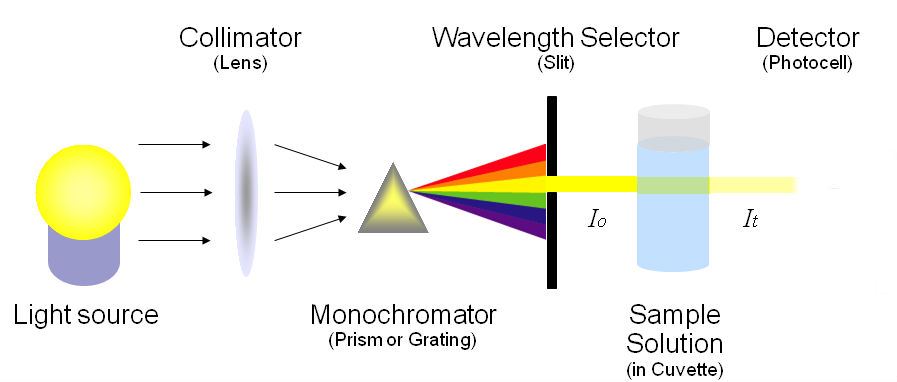
Optical Density Optical Density Formula Optical Density Of Spectrophotometer Byju S

An Intro To Filters For The Landscape Photographer Photography Cheat Sheets Photography Tutorials Photography Tips

Weather Rockets A Special Kind Of Sounding Rocket In 2021 Weather Weather Balloon Rocket

Microbial Od600 Measurement Optical Density Measurement Principle And Method Youtube

Optical Density An Overview Sciencedirect Topics

Difference Between Sram And Dram Random Access Memory Computer Memory Computer Basics

Optical Density For Absorbance Measurements Bmg Labtech

Why You Need Vertical Visuals If Your Audience Is Mobile Eye Health Eye Care Eye Facts

New Theory Suggests Way To Teleport Energy Long Distances Amazing Science Physics And Mathematics Theories About The Universe Quantum World

Optical Density An Overview Sciencedirect Topics

Optical Density For Absorbance Measurements Bmg Labtech

Optical Density An Overview Sciencedirect Topics
Optical Density An Overview Sciencedirect Topics

Pin On Ir Power Meter
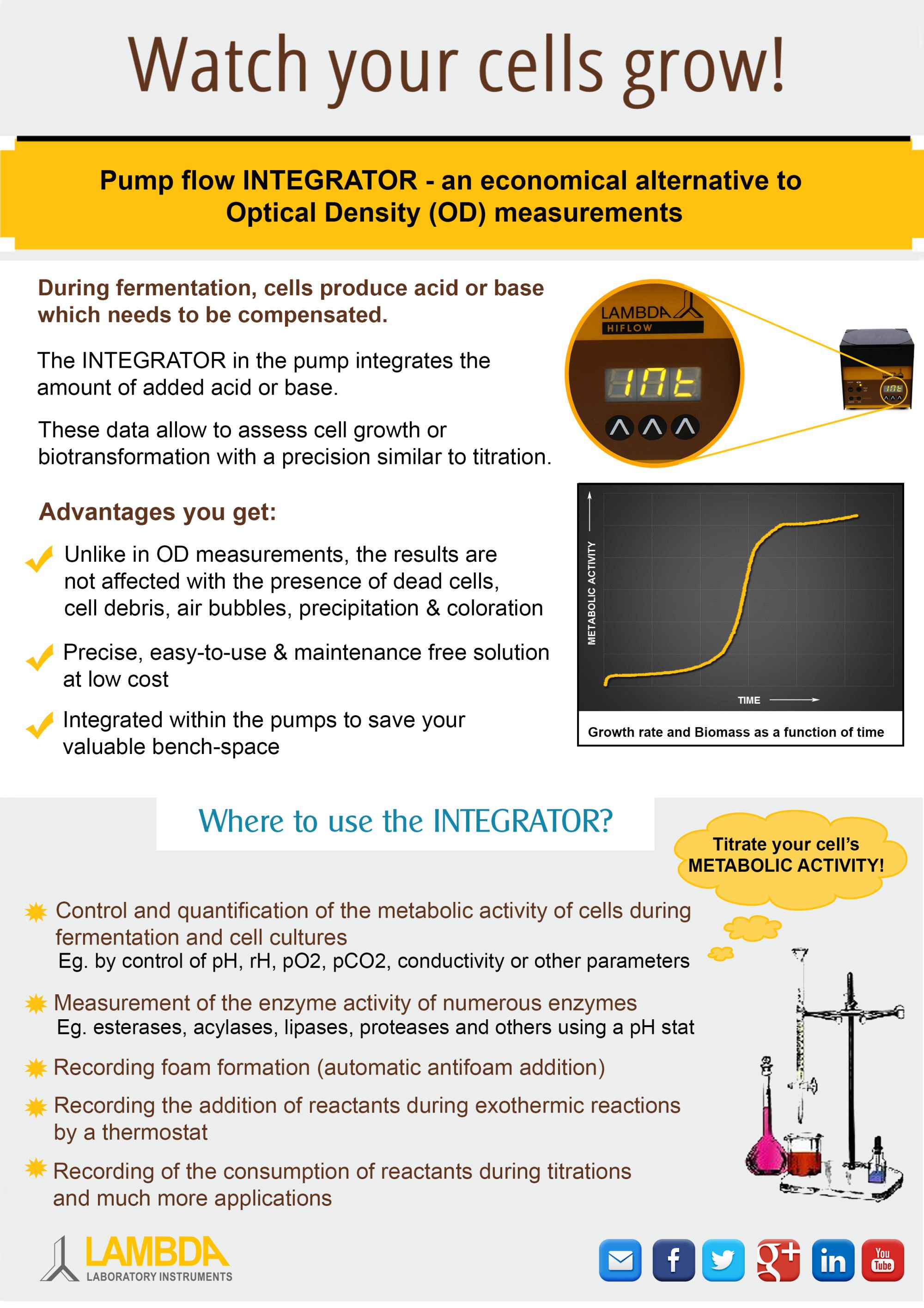
Optical Density Od Measurement

Optical Density An Overview Sciencedirect Topics

Glass Thickness Measuring Tool How Is Glass Thickness Measured Measurement Tools Measuring Glass Laminated Glass


Comments
Post a Comment